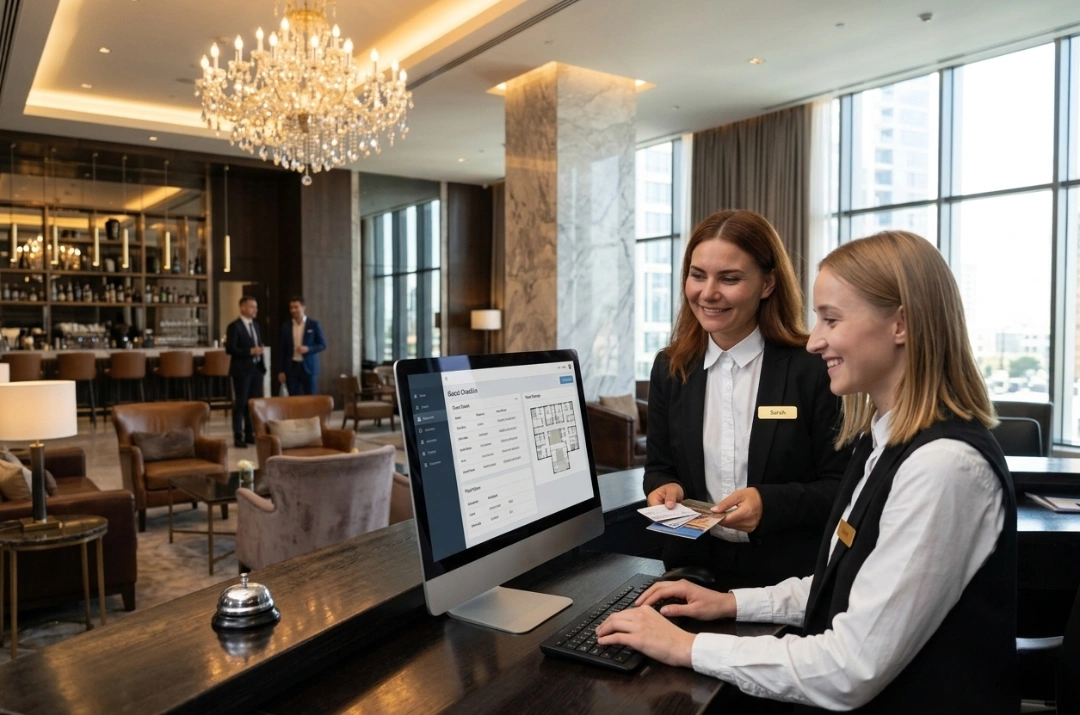
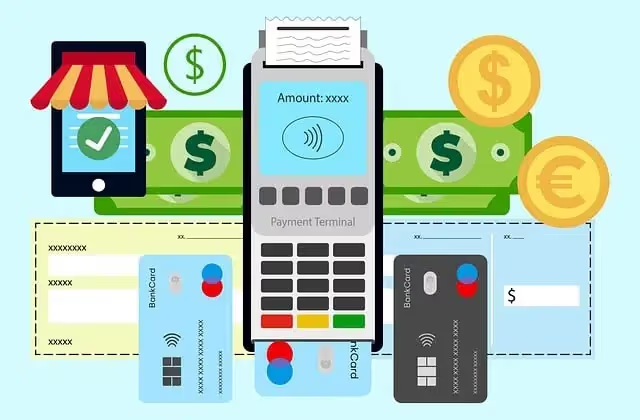
Best Practices For Hotels To Avoid Chargebacks Disputes
Chargebacks cut into hotel revenue and put your merchant account at risk. Here are the best practices to prevent them, the reason codes to know, and the evidence that wins disputes in 2026.
Chargebacks hurt hotels by cutting into revenue, increasing operational costs, and damaging relationships with payment processors.
The most common causes of chargebacks include fraud, misunderstandings, poor customer service, and processing errors.
Preventative measures like clear billing descriptors, digital receipts, fraud detection tools can significantly reduce disputes.
Responding quickly and providing strong evidence is crucial to winning unfair chargeback claims.
roommaster PMS helps hotels combat chargebacks with secure payment processing and seamless record-keeping.
What Is Hotel Chargeback?
A chargeback is a reversal of a credit card transaction, initiated by the cardholder’s issuing bank, which results in the return of funds to the consumer.
Although this mechanism was designed to protect consumers from unauthorized or fraudulent charges, in the hospitality industry, chargebacks can occur for various reasons beyond outright fraud.
For example, a guest might dispute a charge due to dissatisfaction with services, billing errors, or even misunderstandings about hotel policies.
But still, hoteliers need to know that while chargebacks serve as a consumer protection tool, they can also be misused by “friendly fraud,” where consumers dispute legitimate charges to obtain refunds while retaining the services received.
How Chargebacks Hurt Hotel Businesses
Chargebacks may seem like just another of the costs of doing business, but they can have far-reaching consequences for hotels. Beyond the financial loss of refunded transactions, chargebacks can negatively impact operations, reputation, and relationships with payment processors.
1. Financial Losses
Chargebacks don’t just mean losing the money from a disputed transaction, hotels also face additional costs, including:
Chargeback fees: Payment processors charge hotels fees ranging from $20 to $100 per chargeback, no matter if the dispute is won or lost.
Increased processing costs: More chargebacks may result in higher credit card processing fees.
Product/service loss: Hotels provide a service that can’t be “returned,” making chargebacks even more damaging.
The LexisNexis True Cost of Fraud Study found that in 2025 US merchants lost $4.61 for every $1 of fraud, up from $2.40 in 2016, once product loss, banking fines, penalties, and administrative costs are counted.
2. Operational Strain
Managing chargeback disputes requires a lot of time and resources. The process requires gathering all the documentation, talking with banks, and in some cases, even requires arbitration. This takes a lot of attention from the main business activities and can affect daily operations and revenue, some reports estimates that the average cost of handling a chargeback is around $25 to $30 per caseii.
3. Reputation Damage
A lot of chargebacks can show issues in service quality or billing practices. And this perception can affect the trust among guests and partners, which may lead to decreased bookings and revenue. Frequent disputes can lead to:
Negative online reviews: Frustrated guests may leave bad reviews, affecting a hotel’s online reputation.
Loss of repeat business: Guests who experience billing issues may not return.
4. Risk of Losing Merchant Accounts
Payment processors monitor chargeback ratios closely. And if a hotel’s chargeback rate exceeds 1% of total transactions, the business may be classified as “high-risk,” which can lead to:
Higher processing fees
Stricter contract terms
And even potential termination of the merchant account
And of course, without a functioning payment processor, hotels would not be able to accept credit card payments, which could severely impact everything from payments to guest satisfaction.
{{payments-cta}}
What Is the Chargeback Fee?
A chargeback fee is an additional cost required by the acquiring bank or payment processor when a customer disputes a transaction. These fees are meant to cover the administrative costs of handling the dispute.
A. How Much Do Chargeback Fees Cost?
The exact chargeback fee changes based on the hotel’s payment processor and the hotel risk profile, but normally is about:
Low-risk merchants: $20 – $50 per chargeback
High-risk merchants: $50 – $100 per chargeback
If chargeback rates are too high, some payment processors may apply even more extreme penalties or may reserve holdbacks, reducing a hotel’s available cash flow.
B. When Are Chargeback Fees Charged?
Hotels are charged a fee at the same moment when a chargeback is initiated, even if they later win the dispute. This means hotels lose money upfront regardless of the outcome.
C. Can Hotels Recover Chargeback Fees?
No. Even if a hotel successfully disputes a chargeback and the money is returned, the chargeback fee is still non-refundable.
4 Common Types of Chargebacks
Understanding the different categories of chargebacks can help hotels identify patterns and implement better policies to prevent them.
1. Criminal Fraud Chargebacks
These happen when a stolen credit card is used to make a booking. The real cardholder will dispute the transaction and the hotel is forced to refund the amount.
How Can Your Hotel Prevent It:
Use EMV chip readers for in-person transactions.
Require CVC codes and AVS (Address Verification Service) for online bookings.
Implement fraud detection tools to find suspicious transactions.
2. Friendly Fraud Chargebacks
This type of chargeback happens when a guest disputes a charge they did authorized.
How Can Your Hotel Prevent It:
Provide clear, itemized receipts at checkout.
Send automated email confirmations with billing details.
Ensure all the policies on cancellations, deposits, and incidental holds are transparent and easily accessible.
3. Service-Related Chargebacks
Guests may dispute charges if they claim the service was not good or the hotel was not clear about the amenities.
How Can Your Hotel Prevent It:
Maintain accurate online descriptions and photos of rooms and services.
Make sure front desk staff document and resolve guest complaints before they rise.
Offer a satisfaction guarantee policy to address concerns before a guest contacts their bank.
Ethoca's 2025 State of Chargebacks report found that travel and hospitality carry the highest average chargeback value of any sector, about $120 per case, and that friendly fraud now drives a large share of disputes. Clear service, transparent billing, and proactive guest communication directly reduce those chargebacks.
4. Technical Chargebacks, or Processing Errors
These chargebacks occur due to technical issues, like:
Double charges.
Incorrect amounts charged.
Failed promised, yet nor processed refunds.
How Can Your Hotel Prevent It:
Regularly audit payment processing systems for errors.
Train staff to double-check transactions before charging.
Ensure refunds are processed promptly and send confirmation emails to guests.
In the next section, we’ll explore best practices for hotels to avoid chargebacks.
{{pms-one}}
Top 11 Best Practices to Reduce Hotel Chargeback Disputes
Proactive measures will prevent chargeback disputes before they happen, try implementing the following best practices, so your hotel can reduce chargebacks, minimize financial losses, and protect its reputation.
1. Clearly Communicate Hotel Policies
Not enough transparency is one of the top reasons guests dispute charges. Be sure to clearly state policies on cancellations, no-shows, deposits, and incidental charges:
Display policies clearly on the hotel’s website and booking confirmation emails.
Require guests to accept key policies before completing a booking.
Have front desk staff verbally confirm important policies at check-in.
Tip:Try to include a digital signature or checkbox agreement during the online booking process to prove guest consent.
2. Use Detailed Billing Descriptions
Many guests dispute charges because they don’t recognize them on their bank statements. Try to be very descriptive in the charges, use:
“Hotel Name: Room & Services [Date]”
“Hotel Name: Restaurant & Amenities [Date]”
Adding specific details makes it easier for guests to identify legitimate charges.
3. Implement Very Strong Payment Verification Measures
Prevent fraudulent transactions by ensuring secure payment processing through your hotel booking engine:
Use Address Verification Service (AVS) to confirm the cardholder’s billing address.
Require CVV codes for all credit card payments.
Enable 3D Secure authentication to add extra fraud protection.
Use EMV chip readers for in-person transactions.
4. Obtain Signed Agreements and Receipts
A signed agreement acts as evidence in chargeback disputes. Best practices include:
Getting a digital or physical signature at check-in confirming the stay.
Make your guests sign for additional charges like room service or parking.
Sending email confirmations and final invoices upon checkout.
Tip:Store digital copies of receipts for at least 120 days after checkout, because chargeback disputes can occur later.
5. Process Refunds Promptly and Provide Proof
Delayed refunds often lead guests to file chargebacks instead of waiting. To prevent this:
Process refunds immediately upon approval.
Send a confirmation email with refund details.
Keep a record of refund transactions in case of disputes.
6. Monitor and Reduce Incidental Charge Disputes
Incidental charges like minibar usage, parking, or damage fees are frequent sources of chargebacks. Do this to avoid disputes:
Pre-authorizing a security deposit at check-in.
Providing an itemized receipt at checkout.
Notifying guests via email before charging them for post-checkout damages.
Tip:When charging for damages, include photos and detailed documentation as proof.
7. Ensure Customer Support Is Easily Accessible
Many guests dispute charges because they couldn't resolve issues with the hotel directly. A comprehensive property management system helps by:
Providing 24/7 customer service for billing inquiries.
Responding to refund or dispute requests within 24-48 hours.
Offering multiple contact options (phone, email, chat) to resolve concerns before they escalate.
Fact: According to a chargeback guide, inadequate customer service accounts for 10% to 30% of all chargebacks.
8. Use Fraud Detection Tools to Identify Risky Transactions
Hotels should invest in fraud prevention tools that flag high-risk bookings, like:
Unusually high-value reservations.
Lots of bookings made with the same credit card in a short time.
Mismatch between billing and IP address location.
9. Train Staff on Chargeback Prevention
Ensure all employees understand:
How to correctly process payments.
How to document and verify guest charges.
How to handle guest disputes.
10. Keep OTA and Direct Booking Terms Consistent
Disputes often occur when guests expect one policy but encounter another. Using a hotel channel manager helps ensure that cancellation, refund, and deposit policies are synchronized across:
Your hotel website
Online travel agencies (OTAs) like Expedia and Booking.com
Automated guest receipts and confirmations to minimize disputes.
By implementing these best practices for hotels to avoid chargebacks, supported by robust hospitality management software, hoteliers can protect their business from financial loss, maintain a positive guest experience, and ensure long-term profitability.
{{pms-two}}
Understanding Hotel Chargeback Reason Codes
Every chargeback arrives with a reason code, an alphanumeric identifier the card network uses to explain why the dispute was filed. Each network, Visa, Mastercard, American Express, and Discover, maintains its own set of codes, but they group into four families you will see again and again.
Criminal fraud: the cardholder says they never authorized the transaction, usually a stolen card used for a booking.
Consumer disputes: the guest recognizes the charge but disputes it, for example a cancellation they believe was honored, or a service they were unhappy with. Most friendly fraud lands here.
Authorization issues: the charge was not properly authorized, for example a captured amount higher than the approved pre-authorization.
Processing errors: duplicate charges, wrong amounts, or a refund that was promised but never processed.
Why it matters: the reason code tells you exactly what the issuer needs to see. A criminal-fraud code calls for identity and card-present evidence, while a consumer-dispute code calls for the signed policy acceptance and folio. Reading the code first, then building your response around it, is the difference between a win and an automatic loss.
How to Win Unfair Chargeback Claims
Chargeback disputes are not always fair. Sometimes, hotels face chargebacks due to friendly fraud. To fight these claims successfully, hotels need a strong strategy and proper documentation.
1. Gather Strong Evidence
To be able to fight an unfair chargeback, you need to present compelling proof that the charge was legitimate. Essential documents may include:
A signed registration form or electronic check-in record
A copy of the cancellation and refund policy acknowledged by the guest
Transaction logs and IP address records for online bookings
Proof of guest identity verification, like a scanned ID or card authorization form
2. Respond Quickly
Chargebacks come with strict deadlines, generally 7 to 21 days, depending on the card issuer. Delays in responding can result in automatic losses, even if your case is valid.
3. Use Clear Billing Descriptions
Confusing billing descriptors are one of the most common reasons for accidental chargebacks. Make sure your hotel’s name appears clearly on credit card statements.
4. Work with Your Payment Processor
Your payment processor can be a valuable ally in fighting chargebacks, always work with them.
How roommaster Helps You Prevent And Win Chargebacks
roommaster hotel management software provides powerful solutions to help hotels minimize chargebacks and manage disputes efficiently:
Secure Payment Processing: roommaster’s hotel payment gateway ensures secure transactions with PCI-compliant processing, reducing the risk of fraudulent chargebacks.
Seamless Booking & Payment Records: roommaster stores guest details, payment history, and signed agreements, making it easy to present solid evidence against unfair chargeback claims.
Integrated Digital Signatures: Capture guest signatures electronically during check-in and check-out, adding another layer of proof for disputed transactions.
With roommaster’s technology, hotels can protect their revenue, reduce disputes, and streamline chargeback management, ensuring a smoother payment experience for both guests and staff.
{{cta-strip}}
Frequently Asked Questions
1. What is a chargeback at a hotel?
A chargeback at a hotel is the process where a guest disputes a credit card transaction. This dispute prompts the card issuer to reverse the transaction, effectively refunding the guest while placing the financial burden (and additional fees) on the hotel.
2. What does a chargeback do?
A chargeback reverses the payment made for a hotel service. This means the funds are withdrawn from the hotel’s account and returned to the guest, often along with extra fees and penalties. It can impact the hotel’s cash flow, reputation, and may signal issues with billing practices or guest satisfaction.
3. What is the biggest reason hotels receive chargebacks?
The most common reason is friendly fraud, where a guest disputes a legitimate charge, either because they forgot about the transaction or to avoid payment. Other causes include unauthorized transactions, processing errors, and unsatisfactory guest experiences.
4. How long does a hotel have to respond to a chargeback dispute?
The response window varies by payment network, but generally hotels have 7 to 21 days to submit evidence and contest a chargeback. That’s why it’s essential to act quickly.
5. How can hotels prevent friendly fraud?
Use digital contracts and capture electronic signatures at check-in.
Clearly state cancellation and refund policies.
Send email reminders with booking details before check-in.
Use fraud detection tools to flag high-risk transactions.
6. Does roommaster help prevent chargebacks?
Yes! roommaster provides:
Secure payment processing to prevent fraudulent transactions
Digital records & guest signatures to support dispute resolution
7. What is a chargeback vs. a refund?
Refund: A refund is initiated by the hotel (or at the guest’s request) as a voluntary return of funds, often provided to resolve a service issue amicably.
Chargeback: A chargeback is initiated by the guest’s bank after the guest disputes a charge. Unlike refunds, chargebacks involve an investigation by the payment processor and can include additional fees, potentially affecting the hotel’s reputation and revenue.
Mayela Lozano is a content strategist with a passion for hospitality and technology. She collaborates with roommaster on content creation, highlighting how technology can streamline hotel operations and enhance guest satisfaction. When she’s not creating content, Mayela loves to travel and spend time with her two little ones, discovering new adventures and making memories along the way.
Join Thousands of Hotels Thriving with roommaster
The transition to roommaster is straightforward and efficient. Our implementation team handles data migration including reservations, guest profiles, and historical information.
The transition to roommaster is straightforward and efficient. Our implementation team handles data migration including reservations, guest profiles, and historical information.
How Hotel PMS Software Transforms Hospitality Management
September 23, 2026
Hotel Management
Marketing
Pet-Friendly Hotel Amenities & Package Ideas That Drive Revenue
September 22, 2026
Hotel Management
Hotel PMS
Hotel Food And Beverage (F&B): The Complete Guide
September 22, 2026
Hotel Management
Marketing
Hotel Pet Fees: How Much Should You Charge?
September 22, 2026
Hotel Management
Hotel PMS
Best Hotel Food and Beverage (F&B) Management Software In 2026
September 22, 2026
Hotel Management
Marketing
Pet-Friendly Hotel Guide: Policy, Fees & Amenities
September 22, 2026
Payment Processing
Best Hotel Payment Gateway In 2026
September 21, 2026
General
Hotel Management
Preventing Credit Card Fraud In Hotel Operations
September 21, 2026
Payment Processing
Hotel Payment Gateway Software
September 21, 2026
Join Thousands of Hotels Thriving with roommaster
See how roommaster's unified platform can work for your property. Our team will walk you through features tailored to your specific needs and operations.


.png)
.png)
.png)