What is AI in the hospitality industry?
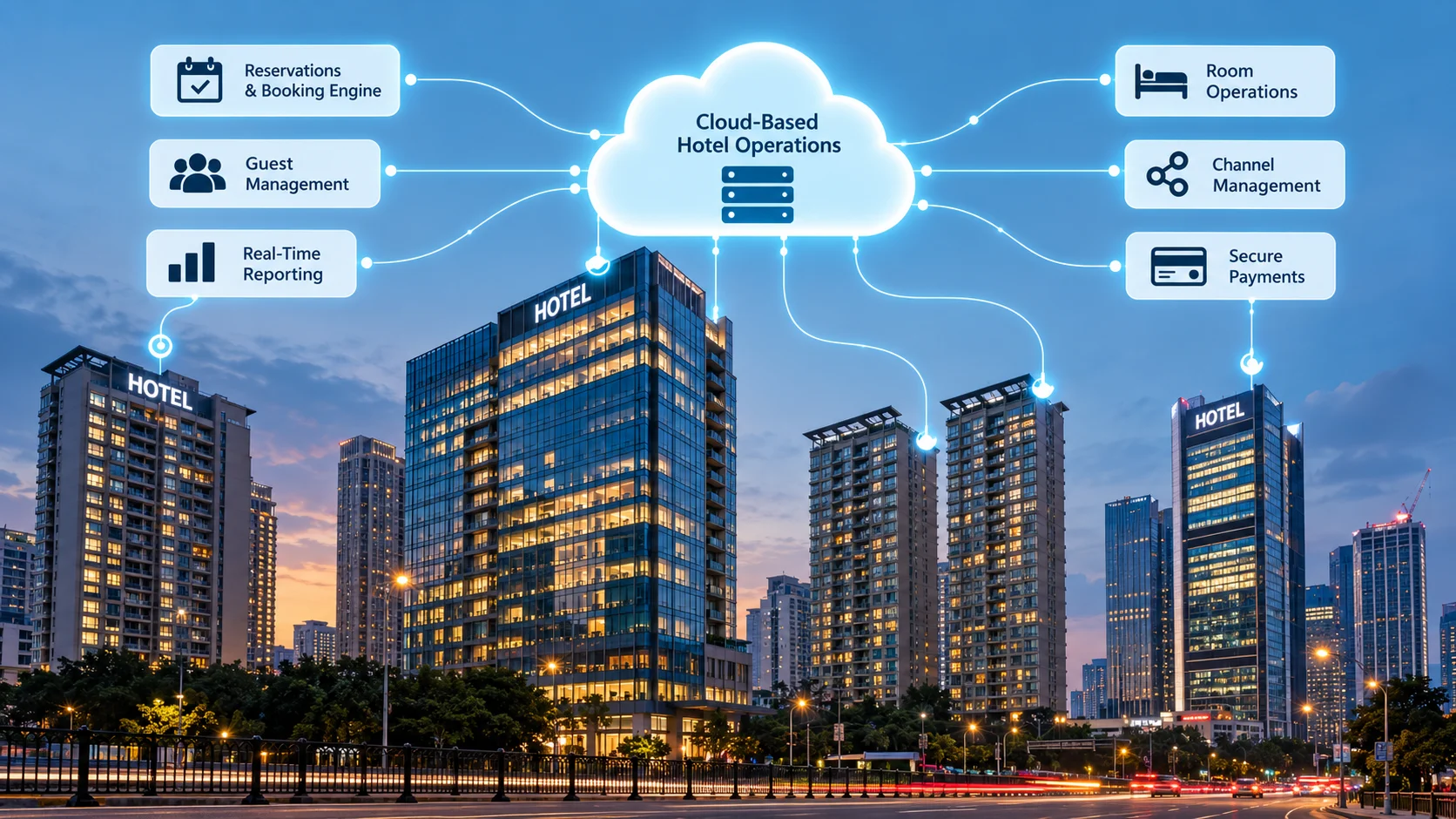
AI in the hospitality industry is the application of artificial intelligence, mainly machine learning, natural language processing and generative models, to the work of running a hotel. It powers the systems that answer guest questions, set room rates, forecast demand, route housekeeping and flag maintenance before it becomes a complaint.
In plain terms, AI is software that learns from data and acts on it. For a hotel that means turning the raw information you already collect, bookings, guest profiles, occupancy, service history, into decisions and actions, instead of leaving it in reports no one has time to read.
{{pms-two}}
How AI is used in hospitality
The practical uses fall into three groups. This is the quick reference, then each in turn:
| Area |
AI use cases |
What it delivers |
| Guest experience |
AI concierge, chatbots, personalization, smart rooms |
24/7 answers, tailored offers |
| Revenue |
Dynamic pricing, demand forecasting, upsell targeting |
Better rate and occupancy |
| Operations |
Housekeeping optimization, predictive maintenance, guided night audit |
Lower cost, fewer errors |
AI for guest experience and personalization
The most visible use is guest-facing. AI reads a guest's history and preferences and tailors the stay, room type, offers, upsells, and the messages they receive, so contact feels relevant instead of generic. Connected guest management is what makes this accurate, because personalization is only as good as the profile behind it. A guest app that carries this through the stay, such as a hotel guest app, extends it from booking to checkout.
AI concierge and chatbots
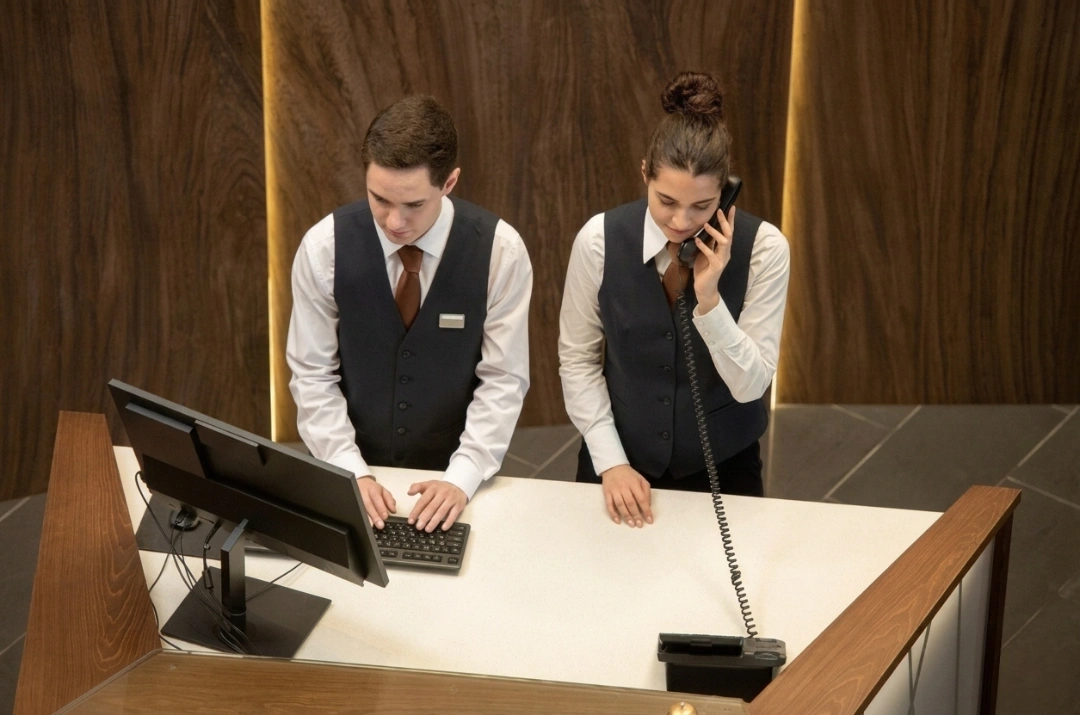
An AI concierge answers guest questions in natural language, at any hour, in multiple languages, without waiting on a busy front desk. It handles the repetitive queries, Wi-Fi, checkout time, directions, availability, and hands off to a human when the question needs one. roommaster's hotel ai agent does this at the front desk and pre-arrival, and the wider category is covered in hotel ai agents. The operator payoff is real: fewer interruptions per shift and faster guest answers.
{{concierge-one}}
AI for revenue management and dynamic pricing
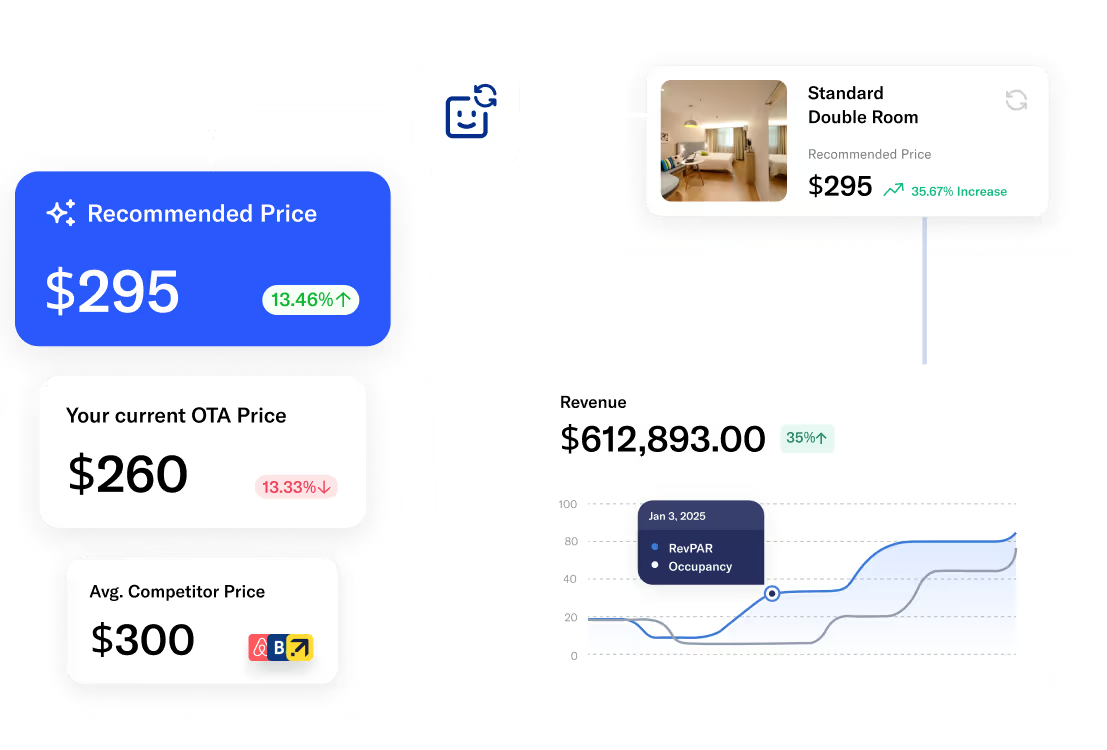
AI reads booking pace, seasonality, competitor rates and local demand signals to recommend the right rate at the right time, far faster than a manual spreadsheet. This is the engine behind the dynamic pricing hotels use to lift rate in demand and protect occupancy in soft periods. Applied through hotel revenue management software, it turns pricing from a weekly chore into a continuous, data-led decision.
{{revenue-management-one}}
AI for hotel operations and housekeeping
Behind the scenes, AI sequences housekeeping by real check-out and arrival patterns rather than a fixed list, so rooms are ready when guests arrive and staff are not sent to empty rooms. Paired with housekeeping software, it turns room status into a live, prioritized board instead of a morning guess.
AI for predictive maintenance
Predictive maintenance uses data from equipment and service history to flag a failing HVAC unit or water heater before it breaks in front of a guest. It shifts maintenance from reactive to planned, which cuts emergency callouts and protects reviews. A documented hotel preventive maintenance checklist is the manual version; AI makes it proactive.
{{pms-three}}
Benefits of AI in hospitality
For an operator, the benefits are concrete:
- 24/7 service without 24/7 staff: the concierge and chatbot cover the hours a lean team cannot.
- Better rate decisions: continuous, data-led pricing beats a weekly manual review.
- Lower operating cost: smarter housekeeping and maintenance routing cut wasted labor and emergency spend.
- Time back for staff: removing repetitive work lets the team focus on the guest in front of them.
- Insight from data you already have: AI surfaces patterns in bookings and reviews you would never find by hand.
Examples of AI in hospitality
- A virtual concierge answering pre-arrival questions and routing bookings to the hotel's own site.
- A dynamic pricing engine raising weekend rates automatically when a local event lifts demand.
- Predictive housekeeping that cleans checkout rooms first when a high-occupancy afternoon is coming.
- Sentiment analysis that reads reviews and flags a recurring complaint before it spreads.
- Guided night audit that reconciles the day's revenue and flags anomalies instead of relying on memory.
Two worked scenarios make it concrete. A 40-room boutique near a convention center points its AI concierge at after-hours questions: the bot fields the 9 p.m. "do you have parking and late checkout" queries that used to go unanswered, and books the guest direct instead of losing them to an OTA. A 120-room resort turns on dynamic pricing before a festival weekend: the engine reads the booking surge and lifts the rate in steps as rooms sell, capturing demand a manual weekly rate review would have missed. Neither hotel added a single staff member to do it.
Here is how a guest question flows through an AI concierge, end to end:
| Stage |
What happens |
Result |
| Guest asks |
"Any rooms for this weekend with a kitchen?" at 11 p.m. |
Instant reply, no wait |
| AI reads intent |
Checks live availability and room type |
Accurate, real-time answer |
| AI routes |
Sends the guest to the direct booking engine |
Booking stays commission-free |
| Handoff |
A complex request escalates to staff with history attached |
Guest never repeats themselves |
Challenges and responsible AI adoption
AI is not plug-and-play. The common blockers are messy data, staff fear that AI replaces jobs, and buying tools that do not talk to each other. Adopt it responsibly:
- Build a clean data foundation first. AI trained on bad data makes confident mistakes.
- Be transparent with guests. Tell them when they are talking to a bot and make the human handoff easy.
- Reframe roles, not headcount. Position AI as removing the repetitive work, because staff who trust it use it.
- Start integrated. Prefer AI built into the systems you already run over a shelf of disconnected point tools.
How independent hotels can start with AI
- Pick the highest-friction task. Usually guest questions after hours or manual pricing.
- Use one integrated system. Let the PMS carry the AI so data flows and nothing is double-entered.
- Measure against the old way. One month, one metric, then decide.
- Keep a human in the loop. AI recommends and drafts; staff approve and handle exceptions.
- Expand on proof. Add the next use case only once the first shows a result.
The bottom line
AI in hospitality lets a small independent hotel do more with the same team: it delivers 24/7 guest service, chain-level pricing and lower-cost operations without growing headcount. Start with one high-friction task, run it on integrated independent hotel software so the data stays clean, keep a human in the loop, and expand only on proven results. The winners are not the hotels with the most AI tools, but the ones that adopt it deliberately.
See how roommaster puts an AI concierge, smarter pricing and connected data inside one hotel property management system.
{{cta-strip}}
Frequently asked questions
1. What is AI in the hospitality industry?
It is the use of machine learning, natural language processing and generative AI to run guest service, pricing and operations, turning the data a hotel already collects into faster, better decisions and 24/7 service.
2. How is AI used in hotels?
Most commonly for AI concierge and chatbots, personalization, dynamic pricing and demand forecasting, and operations such as housekeeping routing and predictive maintenance.
3. Does AI replace hotel staff?
No. It removes repetitive tasks so staff spend more time with guests. The concierge covers off-hours questions; humans handle judgment, exceptions and hospitality itself.
4. What are the benefits of AI for a small hotel?
Round-the-clock service without extra headcount, better rate decisions, lower operating cost, and insight from booking and review data a lean team could not analyze by hand.
5. How do independent hotels start using AI?
Begin with one high-friction task, run it inside an integrated PMS so data flows cleanly, measure it against the old method for a month, and keep a person approving the output.

.avif)

.png)
.png)
.png)